Monday, November 5, 2012


In the winter quarter 2013 I will be teaching the Technology & Society gateway seminar at UCSB. Here are some details.
Technology & Society Gateway Seminar
Winter 2013
Theme: Infrastructures of the Information Age
FMST 595TS - T  1-3pm
1310 SSMS
The Technology and Society gateway seminar is designed to introduce graduate students who are interested in the Technology and Society Ph.D. emphasis to an interdisciplinary area of research. The gateway is also required for all Technology and Society Ph.D. emphasis students. Students who have already taken the gateway course but are interested in this topic are encouraged to take the course again. CITS affiliated faculty members are also invited to participate in the seminar. The course is graded P/NP with attendance, participation, and a class presentation during the quarter as the only requirements.
The winter 2013 gateway seminar will focus on infrastructures of the information age—the physical objects, sites, and systems through which data is distributed on local, national, or global scales. The course will provide opportunities for students to engage with interdisciplinary research on Internet, mobile telephone, transoceanic cable, satellite, and/or broadcasting systems. Each week seminar participants will develop a presentation and facilitate a discussion about an infrastructure-related research project in his/her area of interest. Students can either choose from a bibliography provided by the instructor or select another topic. The course will provide opportunities to explore information infrastructures in relation to such issues as: mapping; history; economics; globalization; citizenship; digital divides/ICTD; policy and regulation; network design; environmental concerns; security; labor; art; visualization; and cultures of everyday life. Students will be asked to share relevant websites, maps, and media as part of our collective investigation of information infrastructures. We will also do an infrastructure site visit together.
Possible Readings
Bijker, Wiebe, et al. The Social Construction of Technological Systems: New Directions in the Sociology and History of Technology. MIT Press, 1987.
Blum, Andrew. Tubes: A Journey to the Center of the Internet. Ecco, 2012.
Cohen, Julie. Configuring the Networked Self: Law, Code, and the Play of Everyday Practice. Yale University Press, 2012.
Downey, Greg. Telegraph Messenger Boys: Labor, Technology, and Geography, 1850-1950. Routledge, 2002 
Frischmann, Brett. Infrastructure: The Social Value of Shared Resources. Oxford University Press, 2012.
Galloway, Alex. The Interface Effect. Polity, 2012.
Goldsmith, Jack and Tim Wu. Who Controls the Internet? Illusions of a Borderless World. Oxford University Press, 2008.
Graham, Stephen, ed. Disrupted Cities: When Infrastructures Fail. Routledge, 2009.
Jaeger, Paul T. et al, “Where is the cloud? Geography, economics, environment, and jurisdiction in cloud computing,” First Monday, vol. 14: no 5, May 4, 2009.
Larkin, Brian. Signal and Noise: Media, Infrastructure, and Urban Culture in Nigeria. Duke University Press, 2008.
Levinson, Marc. The Box: How the Shipping Container Made the World Smaller and the World Economy Bigger. Princeton University Press, 2008. 
Marvin, Simon and Stephen Graham. Splintering Urbanism: Networked Infrastructures, Technological Mobilities and the Urban Condition. Routledge, 2001.
Pinch, Trevor. How Users Matter: The Co-Construction of Users and Technology. MIT Press, 2003.
Rainie, Lee and Barry Wellman. Networked: The New Social Operating System. MIT Press, 2012.
Shannon, Kelly and Marcel Smets. The Landscape of Contemporary Infrastructure. NAi Publishers, 2010.
Star, Susan Leigh. “The Ethnography of Infrastructure.” American Behavioral Scientist, Vol. 43 No. 3, Nov/Dec 1999, 377-391.
Suchman, Lucy, Human-Machine Reconfigurations: Plans and Situated Actions. 2nd ed. Cambridge University Press, 2006.
Tufte, Edward. Envisioning Information. Graphics Press, 1990.


Tuesday, March 27, 2012

SCMS 2012

I just returned from the Society for Cinema and Media Conference in Boston where I participated on a panel called Signal Traffic: Researching Media Infrastructures with Jonathan Sterne (McGill University), Nicole Starosielski (Miami University of Ohio), Shannon Mattern (the New School), and Cristina Venegas (UCSB). This panel emerged out of our "Signal Traffic: Art, Infrastructure, and Geography" workshops at UC Santa Barbara last year, which were funded by the UC Institute for Research in the Arts and the UC Humanities Institute. More info can be found here: http://www.signaltraffic.org/

Nicole Starosielski and I will be organizing a larger conference on this topic in 2013. Stay tuned...

Thursday, February 18, 2010

Media Infrastructure Studies

In preparation for my talk in the InfoStructure lecture series on February 25, 2010 at the University of Illinois at Urbana-Champaign, I am listing some of my infrastructure-related articles that might be of interest for further reading.

“Signals and Oil: Satellite Footprints and Post-Communist Territories in Central Asia,” European Journal of Cultural Studies, Vol. 12(2), 137-156, 2009.

“Around the Antenna Tree: The Politics of Infrastructural Visibility,” Flow, March 2009, available at http://flowtv.org/?p=2507.

“Where the Cable Ends: Television in Fringe Areas.” In Cable Visions: Television Beyond Broadcasting, Sarah Banet-Weiser, Cynthia Chris and Anthony Freitas, eds. New York: New York University Press, 2007, 103-126.

“Postwar Footprints: Satellite and Wireless Stories in Slovenia and Croatia.” In B-Zone: Becoming Europe and Beyond, Anselm Franke, ed. Barcelona: ACTAR Press, 2005. Reprinted as an expanded version with “Afterthougts” and translated into Spanish in Political Typographies: Visual Essays on the Margins of Europe, Barcelona: Fundacio Antonio Tapies, 2007, pp. 87-140.

“Obscure Objects of Media Studies: Echo, Hotbird, Ikonos,” in Strange Spaces: Explorations into Mediated Obscurity, eds. Amanda Lagerkvist and Andre Jansson, Ashgate Publishing, 2009.

"Kinetic Screens: Epistemologies of Movement at the Interface," in Media/Space: Place, Scale and Culture in a Media Age, eds. Nick Couldry and Anna McCarthy, London: Routledge, 2004, 37-57.

"Insecure Airwaves: US Bombings of Al Jazeera." Forum on Homeland Security, Journal of Communication and Critical/Cultural Studies, 4:2, June 2007, 226,-231.

Sunday, March 15, 2009

CBC Radio Interview

On March 12 I did an interview with CBC (Canadian Broadcast Corporation) in relation to my public lecture "Digging into Google Earth: An Analysis of 'Crisis in Darfur.'" The radio interview is available online here: http://www.cbc.ca/radionoonmontreal/

Saturday, March 7, 2009

Beaverbrook Scholar in Residence at McGill

I am honored to be working as the Beaverbrook Scholar in Residence at McGill University in Montreal for two weeks. Information about the program can be found here: http://media.mcgill.ca/

Thursday, May 29, 2008

ejection seats and contrail sculptures

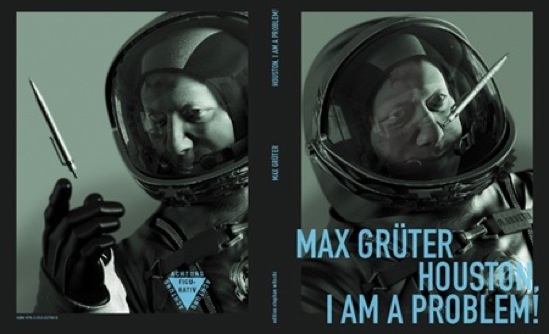
I'm writing a short catalog essay about Max Greuter's work and am focusing on his ejection and contrail works. He's an artist based in Zurich and works like a tinkerer in a wood shop yet uses more and more 3D design software to craft various objects and images that explore the euphorias and anxieties associated with aeronautics and propulsion. Greuter pretends he has his own private space agency and always wanted to be an astronaut.

Thursday, January 31, 2008

Roaming - Installation Description

This installation is designed to situate a visitor at the technological and financial interface of Mongolian white phone workers who operate on the streets of Ulaanbaatar. It includes a projection of a series of straight-on photographs of different phone workers with different stands offering time for sale. The visitor is positioned in front of the projection screen as if he/she is about to purchase a call. While standing at this interface, he/she will be encouraged to recognize a form of public mobile telephony. City maps of Ulaanbaatar are projected onto the floor along with the footprints of wireless phone corporations that operate in the city. The visitor is thus be positioned as if a user who is standing within the footprints of the Mongolian wireless infrastructure. The piece is designed to simulate and stage an act of "roaming" – wireless use in another country – but rather than being charged additional fees, the visitor will learn about a different configuration of mobile telephony. The installation is intended to emphasize technological variation in the context of globalisation, the figurative relocations that occur through transnational infrastructures, and the dialectics of distance and proximity that shape wireless encounters.

Around the Antenna Tree: The Politics of Infrastructural Visibility

Around the Antenna Tree: The Politics of Infrastructural Visibility
see my Flow column by clicking on the image

New Book
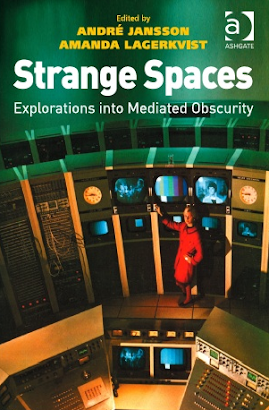
New Book
This book has just been published. An expanded version of my essay "Obscure Objects of Media Studies" is in it

"When Satellites Fall"

"When Satellites Fall"
Click on this photo of orbital debris to read my essay posted on Flow

Goodbye Rabbit Ears: Thoughts about the Digital TV Transition

Goodbye Rabbit Ears: Thoughts about the Digital TV Transition
see my Flow column by clicking on the image

Max Greuter's catalogue
Transmediale Opening - Roaming
Transmediale Opening - Roaming

Participants in CEU Seminar

Naran Satellite Station, Mongolia
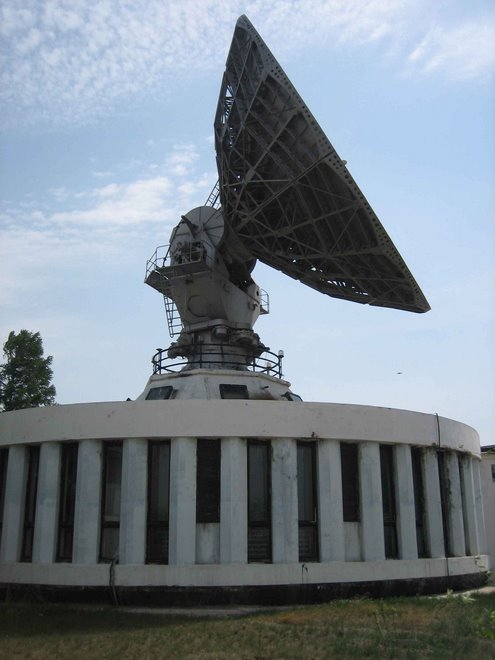
Naran Satellite Station, Mongolia
Intersputnik dish
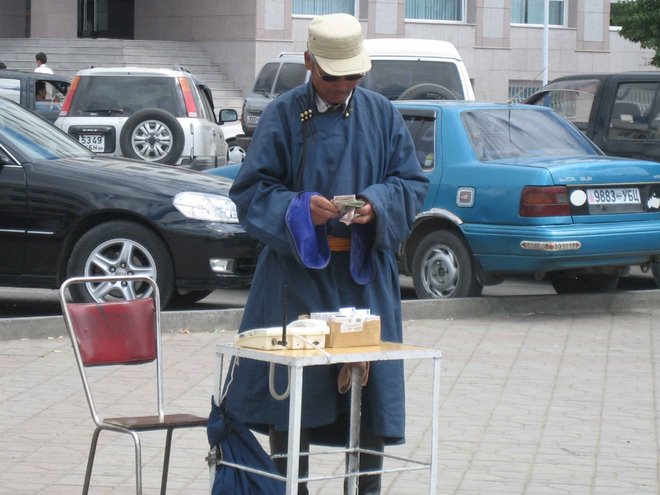
Former herder now a white phone worker

Inside Choijin Lama Temple

Inside Choijin Lama Temple

Naran's Grandma and the rug she made

Naran's Grandma and the rug she made

Satellite Dishes and Solar Panels for Sale at Black Market in Ulaanbatar
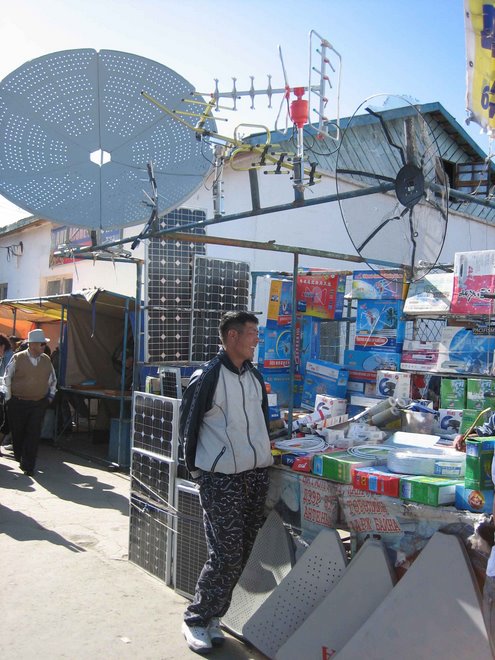
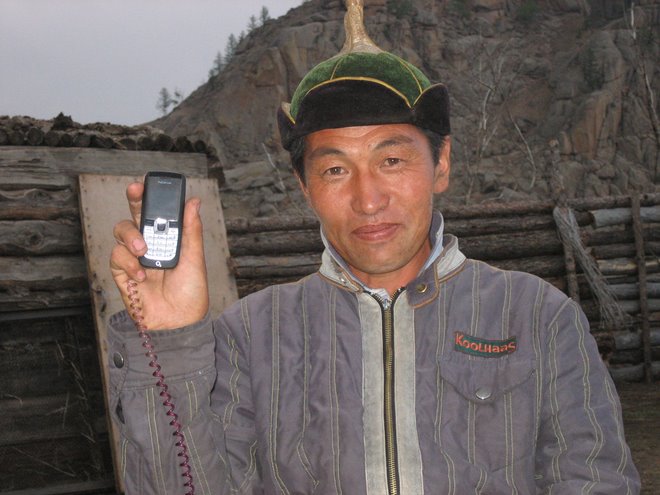
Satellite Dishes and Solar Panels for Sale at Black Market in Ulaanbatar

Ponjee and his Nokia phone
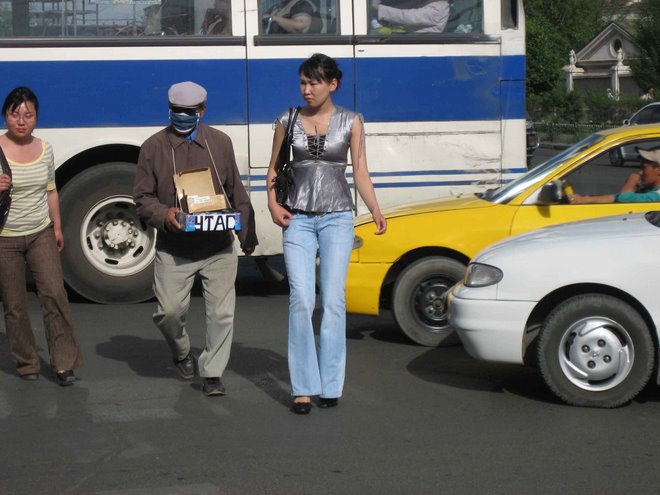
walking phone = yavdag utas
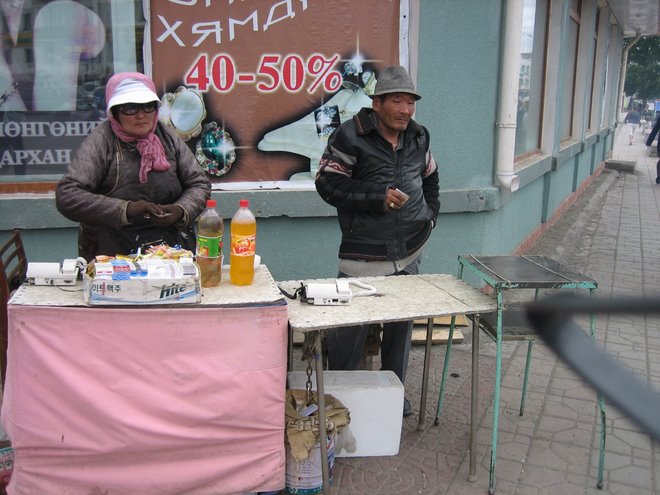
Wireless Phone Workers

Wireless Phone Worker
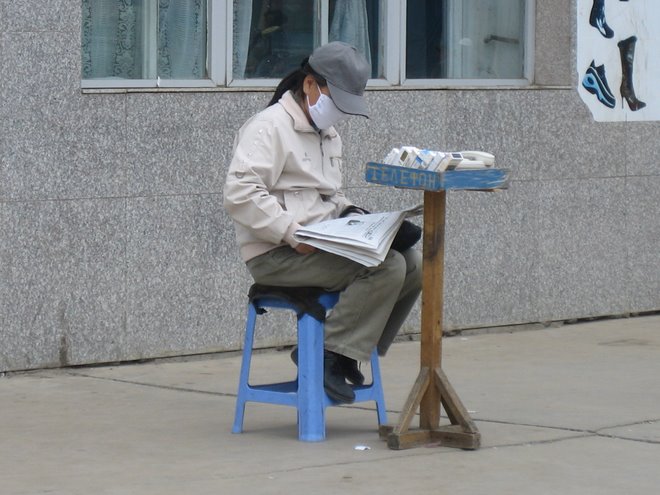
Wireless Phone Worker

Satellite Dish and Tool Seller at Black Market