On June 26 my walking wireless workers installation opened at the Intersections 3 exhibiton in Ulaanbaatar, Mongolia. The project involved four white phone workers situated at four points in a circle facing outward ready to place calls. To activate the installation I called each of the phones from Berlin, highlighting the integration of the white phones within the global wireless infrastructure and economy. Then I called my translator, Zaya, who was located on site at the installation. He projected my voice on a speakerphone and translated my project introduction into Mongolian before a live audience. I paid each of the white phone operators for 2 hours worth of calls (12,000 tgs) and invited visitors of the installation to use the phones for free and help spread information about the arts and Intersections 3 into the wireless bandwidth. Visitors also had access to a handout about my research project and a web interface where they could view photographs of white phone workers that I shot while conducting research in Ulaanbaatar in 2004 and 2007. They also had the opportunity to ask the white phone operators questions about their work and lives.
Zaya and Ochir, curator of Intersections 3, indicated there was great interest in the installation, particularly among the Mongolians who see these white phone workers each day, but rarely stop to think about their work, lives, use of technology, and participation in the economy. Photos and more info will be posted soon, I hope!
Thursday, June 28, 2007

Saturday, June 23, 2007
Upcoming Events
On June 26-28th, my White Phone Workers installation will appear as part of the Intersections 3 international art exhibition in Ulaanbaatar. Thanks to Zaya and Ochir for helping to make this happen.
On July 2, I will give a lecture at Humboldt University in Berlin.
From July 4-9 I will be in Budapest at Central European University teaching a graduate student workshop on Media Globalization together with other colleagues from Europe and the US. My students will be doing a field exercise about media in urban space and I am very much looking forward to this! There is more information about the workshop here:
www.sun.ceu.hu/3Courses/descriptions/Media-2007-detailed.pdf
I put some photos of the Naran Satellite Station and White Phone Workers on my flickr site for those who might best interested. www.flickr.com/photos/cosmowink
On July 2, I will give a lecture at Humboldt University in Berlin.
From July 4-9 I will be in Budapest at Central European University teaching a graduate student workshop on Media Globalization together with other colleagues from Europe and the US. My students will be doing a field exercise about media in urban space and I am very much looking forward to this! There is more information about the workshop here:
www.sun.ceu.hu/3Courses/descriptions/Media-2007-detailed.pdf
I put some photos of the Naran Satellite Station and White Phone Workers on my flickr site for those who might best interested. www.flickr.com/photos/cosmowink
Monday, June 18, 2007
Back in Berlin; Upcoming Lecture and Art Exhibition
I have arrived back in Berlin and my trip to Mongolia was more productive than I ever imagined it could be. I am now preparing for my Einstein Forum lecture in Potsdam on Wednesday, June 20th at 7pm. I will talk about my Mixed Signals book project and focus on my research on Mongolian white phone workers.
Just before I left Ulaanbaatar, I met with an artist and curator, Ochir, who invited me to participate from afar in an international art exhibition later this month in Ulaanbaatar called Intersections 3. We had met and discussed this research a few years ago and he told me he really wanted to include this installation in his upcoming show. So now I am scrambling and coordinating with people in Ulaanbaatar to do an installation piece on June 26th about the white phone workers and I am providing a draft description of the installation concept below.
White Phone Workers Installation
As wireless telephony industry boomed around the world throughout the late 1990s and early 2000s an innovative practice of public wireless telephony emerged in Ulaaanbaatar. In 2001 Mobicom and Mongol Telecom began selling CDMA wireless phones to families who were out of range of landline service. Some of these customers began developing their own business enterprises by selling time on their phones to other citizens and charging 100 tg per minute, twice as much as their own per minute fee. Now there are 15,000-17,000 white phone workers on the streets of Ulaanbaatar selling wireless phone calls to passersby. They work day and night, summer and winter and some earn supplemental income by selling cigarettes, gum and coffee as well.
The “White Phone Workers” installation is designed to draw attention to this new labor force within the telecom sector. Many of these workers migrated to Ulaanbaatar after the economic collapse of the 1990s and have used this as transitional work as their careers and livelihoods have shifted with the change from a communist to a capitalist economic system. The installation is comprised of four white phone workers, situated in a circle, all of whom have unique life stories. Visitors are invited to place phone calls and ask the workers questions about their jobs and lives. Visitors can also view some of Parks’ photographs online at www.flickr.com/photos/cosmowink/sets/72157600378397472/.
The installation is designed to encourage visitors to consider the transitional and flexible labor practices that have emerged with the development of new telecom and information technologies in Mongolia. Some white phone workers were previously employed as herders in the countryside, tractor operators, construction workers, teachers, or café owners, among other careers. Now they work an average of 8-10 hours a day sitting on the street, often wearing surgical masks to protect themselves from pollution and communicable diseases, and their income is based upon fluctuating traffic flows and demand for wireless phone access. As more and more Mongolians are able to purchase their own wireless phones, it is possible that white phone work may disappear, and many of these workers will be displaced yet again.
This installation is based upon research conducted in Ulaanbaatar in 2004 and 2007, and is related to a book in progress entitled Mixed Signals: Media Technologies and Cultural Geographies being written while Parks is a research fellow at the Wissenschaftskolleg (Institute for Advanced Study) of Berlin in 2006/2007.
Just before I left Ulaanbaatar, I met with an artist and curator, Ochir, who invited me to participate from afar in an international art exhibition later this month in Ulaanbaatar called Intersections 3. We had met and discussed this research a few years ago and he told me he really wanted to include this installation in his upcoming show. So now I am scrambling and coordinating with people in Ulaanbaatar to do an installation piece on June 26th about the white phone workers and I am providing a draft description of the installation concept below.
White Phone Workers Installation
As wireless telephony industry boomed around the world throughout the late 1990s and early 2000s an innovative practice of public wireless telephony emerged in Ulaaanbaatar. In 2001 Mobicom and Mongol Telecom began selling CDMA wireless phones to families who were out of range of landline service. Some of these customers began developing their own business enterprises by selling time on their phones to other citizens and charging 100 tg per minute, twice as much as their own per minute fee. Now there are 15,000-17,000 white phone workers on the streets of Ulaanbaatar selling wireless phone calls to passersby. They work day and night, summer and winter and some earn supplemental income by selling cigarettes, gum and coffee as well.
The “White Phone Workers” installation is designed to draw attention to this new labor force within the telecom sector. Many of these workers migrated to Ulaanbaatar after the economic collapse of the 1990s and have used this as transitional work as their careers and livelihoods have shifted with the change from a communist to a capitalist economic system. The installation is comprised of four white phone workers, situated in a circle, all of whom have unique life stories. Visitors are invited to place phone calls and ask the workers questions about their jobs and lives. Visitors can also view some of Parks’ photographs online at www.flickr.com/photos/cosmowink/sets/72157600378397472/.
The installation is designed to encourage visitors to consider the transitional and flexible labor practices that have emerged with the development of new telecom and information technologies in Mongolia. Some white phone workers were previously employed as herders in the countryside, tractor operators, construction workers, teachers, or café owners, among other careers. Now they work an average of 8-10 hours a day sitting on the street, often wearing surgical masks to protect themselves from pollution and communicable diseases, and their income is based upon fluctuating traffic flows and demand for wireless phone access. As more and more Mongolians are able to purchase their own wireless phones, it is possible that white phone work may disappear, and many of these workers will be displaced yet again.
This installation is based upon research conducted in Ulaanbaatar in 2004 and 2007, and is related to a book in progress entitled Mixed Signals: Media Technologies and Cultural Geographies being written while Parks is a research fellow at the Wissenschaftskolleg (Institute for Advanced Study) of Berlin in 2006/2007.
Wednesday, June 13, 2007
Two Grandmothers, Two Gers
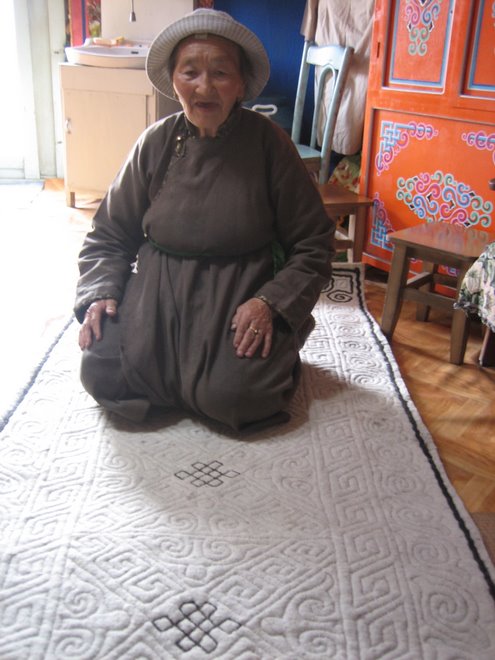
Today I visited a ger settlement to explore how people live in these areas and how television and mobile telephony are integrated within everyday life. I will save this discussion for my book. Here I want to tell a bit about the people I met. One of my friend’s arranged for me to meet with two grandmothers who live in two separate gers on the same lot in a settlement about 15 km out of the center of UB. They are both in their 70s and are vibrant and strong. One of them had nine children, and the other had five. They are originally from the Hovd region in Western Mongolia and one moved to UB 4 years ago and the other moved here last year. I first visited the ger of the grandma who had nine children and she presented me with a table of food and fresh hot milk, which she was heating on the stove in her ger. She was quite a character and was bustling around the ger trying to prepare things for me and her sister who was also visiting that afternoon. I ate fresh hot bread that she prepared on her small stove –everything was delicious! After a while I was invited into the ger of the second grandmother, who also presented me with a table full of food, and this time I had hot dumplings as well, cooked on the stove inside her ger. They were delicious! Her granddaughters and a great granddaughter were also there and I enjoyed meeting all of them. In each of the gers, the grandmothers put on their formal national dresses and we took photos. I will put them on my flickr website soon. When I went back into the ger of the first grandmother, she presented me with a large wool rug that she hand-made out of sheep’s wool, camel hair and yak hair. It took her 25 days to make and it is absolutely beautiful. I was so honored and asked her many questions about how she made it. She also proudly showed me the small needle that she made it with. I was almost in tears by the end of my visit because both of the grandmothers were so warm and generous, They reminded me of my own grandmothers who passed away in recent years, and whom I miss very much! Maybe they were watching this scene and winking from above! Before I left, I gave my silver Mexican bracelet to the grandma who made the rug. She had noticed it on my wrist and commented on it when I first arrived. She had a similar one on her wrist made of Mongolian silver that she hasn’t taken off for 20 years.
Tuesday, June 12, 2007
Phone Workers, Uluusnet and the History Club
One of the reasons I am here is to do further research about the public wireless phone workers. They are situated all over the city in Ulaanbaatar, and I have been taking photos and conducting interviews with them to learn more about this new part of the telecom sector. There are about 17,000 of these workers around the city and they are young and old, dressed in traditional deels or in modern urban clothing. In addition to selling time on their phone (100 tg per minute, about $.10USD per minute, they sell cigarettes, wrigley gum, packets of instant coffee and candies. Yesterday I stayed in an open shopping mall area where many of them are working for quite a while to get a sense of the volume of their customers, the amount of time they stay in one place, the way they spend their time, and so on. I also watched a very drunk man harassing several of the female phone workers because he wanted a cigarette for free. He was very insistent to the point where he became physical and one of the women finally managed to chase him away.
I also had a very interesting interview yesterday with the CEO of a new startup company called Uluusnet, which is a wireless internet provider in UB. Mongolia is one of the first 50 countries in the world to launch wimax services. Their office is in the top floor of a brand new skyscraper that also houses a new airline called EZ Nis. The views of the city from the Uluusnet office were incredible! I will eventually post some of them on my flickr website. Wimax service is now available for about $40USD per month, which is only affordable to a select few in UB. One of the primary shareholders of this new company is Mobicom, the largest wireless operator in Mongolia, whose majority owner is a Japanese company. And the CEO is a fascinating man who used to work for Skytel, the other major wireless operator. He has lived and worked in Turkey and Italy and speaks Turkish, Russian, English and Mongolian. He is also a very imaginative and strategic thinker and is extremely proud to be running this new company in Mongolia. He told me his dream is to provide wireless access throughout the country (even throughout the most remote parts of the countryside). The name Uluus, in fact, means country or nation in Mongolian language.
Last night I was invited to dinner by my friend Naran's mother. She took me to a restaurant called the History Club, and the architectural design was part ger and part modern building. It was a very nice restaurant and the center piece was a karaoke area with flashing lights beaming onto the floor. At one point four young musicians came out of a back room and began playing traditional mongolian instruments. They were fantastic! Apparently they usually play all night but had to leave early for a CD recording session.
I also had a very interesting interview yesterday with the CEO of a new startup company called Uluusnet, which is a wireless internet provider in UB. Mongolia is one of the first 50 countries in the world to launch wimax services. Their office is in the top floor of a brand new skyscraper that also houses a new airline called EZ Nis. The views of the city from the Uluusnet office were incredible! I will eventually post some of them on my flickr website. Wimax service is now available for about $40USD per month, which is only affordable to a select few in UB. One of the primary shareholders of this new company is Mobicom, the largest wireless operator in Mongolia, whose majority owner is a Japanese company. And the CEO is a fascinating man who used to work for Skytel, the other major wireless operator. He has lived and worked in Turkey and Italy and speaks Turkish, Russian, English and Mongolian. He is also a very imaginative and strategic thinker and is extremely proud to be running this new company in Mongolia. He told me his dream is to provide wireless access throughout the country (even throughout the most remote parts of the countryside). The name Uluus, in fact, means country or nation in Mongolian language.
Last night I was invited to dinner by my friend Naran's mother. She took me to a restaurant called the History Club, and the architectural design was part ger and part modern building. It was a very nice restaurant and the center piece was a karaoke area with flashing lights beaming onto the floor. At one point four young musicians came out of a back room and began playing traditional mongolian instruments. They were fantastic! Apparently they usually play all night but had to leave early for a CD recording session.
Monday, June 11, 2007
Internet Cafes and Temples
I am spending some time in Internet cafes and they are usually nearly full and buzzing with activity. The kinds of uses range from young men playing computer games (with great enthusiasm I might add) and young women using Skype and instant chat applications to communicate with people outside of Mongolia. Some older men and women come in to check their email and others are downloading music files. I have also seen young people working on their resumes and sending email. The point is that Internet cafes are used very actively in this city and they appear almost on every block in the main area of the city. This is occuring at the same time that Wimax (wireless internet access) is on the cusp of being developed here. I have an interview with a representative of a wireless web provider this afternoon, called Ulusnet. It will be interesting to see how the location-based commerce develops here since Mongolians do not use residential and businesses addresses in the same way as in Western countries nor do they have a grid system to their urban design.
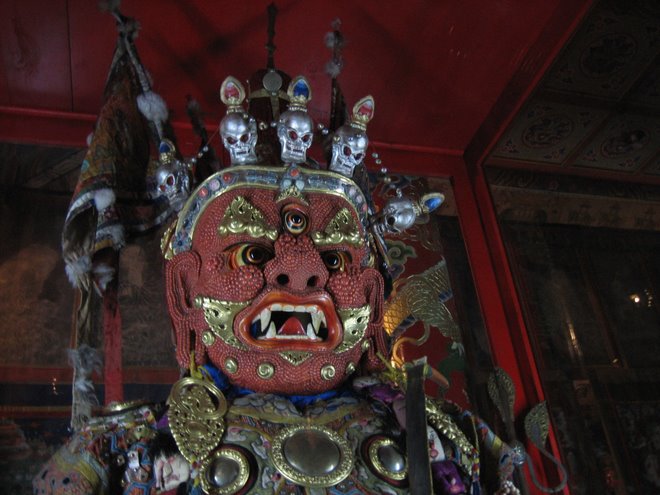
This past weekend I tried to do some cultural activities and take a break from research. Yesterday I went to the largest Buddhist temple in Ulaanbaatar (one of the only ones that was not destroyed by the Soviets during the 1930s) and saw a golden Buddha statue that was 5 stories tall. It is one of the largest interior statues of Buddha in the world. We also visited a temple in honor of the Yadam god and saw beautiful ornamental sweets that the monks make from flour, sugar, water and dyes to feed the gods. I went to a nearby shop and bought some incense that many people here burn, which is made out of a kind of pine grown in Mongolia. It is supposed to chase evil spirits away and was even being burned throughout the office building of Telecom Mongolia that I visited the other day.
After that we went to Terelej area to visit Zaya's uncle, Ponjee, who used to run a communist operated ger camp. This camp was recently sold to another company and now Ponjee has his animals in the same area and is trying to develop his own tourist ger camp within the next year. He has 60 horses, 100 cattle and lots and lots of sheep as well. I saw a foal that was one day old! We rode some of his horses up into the valley for a few hours and the scenery was so beautiful--tall forested peaks, huge rock formations, and vast open steppes! The horses are called "honghor half moon" because they have white half-moon shapes on their faces. My horse galloped so fast I felt like I was flying! After riding, we sat in the ger and had some alcohol made from horse's milk and fry bread. We also had some milk tea and talked to the family for a while. Ponjee and I laughed when realizing we had the same Nokia cell phone. He held his up for a photo. He told me that in the summer he eats no meet and only has 3 cups of horse milk in the morning and before he goes to bed. He took me in the ger to show me an enormous sak made out of cow hide that is used to store the horse milk, which they refer to as "white food."
Just before sunset we dashed across the rough road to see an ENORMOUS Chinggis Khan monument being built in the middle of an open steppe about 80 km outside of UB, which will become a big tourist destination in the coming year. The plan is to build a 100 gers around the statue. There are alread ger camps sprouting up in the distance around this area, some with international investors.
This past weekend I tried to do some cultural activities and take a break from research. Yesterday I went to the largest Buddhist temple in Ulaanbaatar (one of the only ones that was not destroyed by the Soviets during the 1930s) and saw a golden Buddha statue that was 5 stories tall. It is one of the largest interior statues of Buddha in the world. We also visited a temple in honor of the Yadam god and saw beautiful ornamental sweets that the monks make from flour, sugar, water and dyes to feed the gods. I went to a nearby shop and bought some incense that many people here burn, which is made out of a kind of pine grown in Mongolia. It is supposed to chase evil spirits away and was even being burned throughout the office building of Telecom Mongolia that I visited the other day.
After that we went to Terelej area to visit Zaya's uncle, Ponjee, who used to run a communist operated ger camp. This camp was recently sold to another company and now Ponjee has his animals in the same area and is trying to develop his own tourist ger camp within the next year. He has 60 horses, 100 cattle and lots and lots of sheep as well. I saw a foal that was one day old! We rode some of his horses up into the valley for a few hours and the scenery was so beautiful--tall forested peaks, huge rock formations, and vast open steppes! The horses are called "honghor half moon" because they have white half-moon shapes on their faces. My horse galloped so fast I felt like I was flying! After riding, we sat in the ger and had some alcohol made from horse's milk and fry bread. We also had some milk tea and talked to the family for a while. Ponjee and I laughed when realizing we had the same Nokia cell phone. He held his up for a photo. He told me that in the summer he eats no meet and only has 3 cups of horse milk in the morning and before he goes to bed. He took me in the ger to show me an enormous sak made out of cow hide that is used to store the horse milk, which they refer to as "white food."
Just before sunset we dashed across the rough road to see an ENORMOUS Chinggis Khan monument being built in the middle of an open steppe about 80 km outside of UB, which will become a big tourist destination in the coming year. The plan is to build a 100 gers around the statue. There are alread ger camps sprouting up in the distance around this area, some with international investors.
Saturday, June 9, 2007
Transmitters and Half Moon
Yesterday I visited the HonHor re-transmission station, which is connected to the history of radio broadcasting in Mongolia, which began in 1934. The station is marked by a field of transmission towers about 20 km east of Ulaanbaatar. I met with the director of the facility who gave me a tour and showed me several generations of equipment, the first of which was manufactured in the Soviet Union. The facility is next to a ger village, and further out there are herders working, moving goats and sheep across the landscape. It is interesting to see the juxaposition of a radio and television transmission facility plopped down in an area in which herders still work. I met a young boy who rode up on a horse to meet us. I gave him a granola bar and he smiled and told me his name and his horse's name. He was wearing a pink pokemon shirt and pink pants -- he told Zaya that was his favorite color.
We also went to meet with the marketing director and founders of the wireless network Skytel. The service center was packed with people subscribing to new services, paying their bills or buying new phones. They have 200,000 subscribers and use CDMA technology. They are the third largest wireless provider in the country. The company has ad campaigns in the last year called "NICE" and "COOL" and they are minimalist in that they feature a nice or cool looking person next to the company's brand name and new orange bubble logo.
Yesterday we also visited a new Buddhist monument that was established a few years ago at the base of the valley where Zaya lives. It sits below a monument to Soviets, which was installed on a hill overlooking the sitting in honor of their military interventions during WWII when the Japanese occupied and tried to take over certain parts of Mongolia. There is a constant flow of people visiting both of these monuments.
After a very busy work of meetings and work, Fri night I ended up going up into the mountains with some new friends. We ate dinner at an old Soviet style hotel that was sort of falling apart, but had delicious mongolian food. We sat outside on a table in a forest area and the wind picked up like crazy so we decided to go into the hotel basement and play ping pong and pool late into the night. I played ping pong with a Christian Mongolian woman who is expecting twins in December. She was an excellent player! It was an interesting group of people -- there was also a sculptor, a manager from the ministry of labor, a cargo container operator, a banker, a toyota dealer, a guy who owns a driving school, and a teacher. They are all friends from school and invited me to join them. We had a blast together--though I was not able to keep up with their pace of vodka-drinking. We drove home on a dirt road, taking the back way and a half moon was peaking above the mountain and it was soooo beautiful!
We also went to meet with the marketing director and founders of the wireless network Skytel. The service center was packed with people subscribing to new services, paying their bills or buying new phones. They have 200,000 subscribers and use CDMA technology. They are the third largest wireless provider in the country. The company has ad campaigns in the last year called "NICE" and "COOL" and they are minimalist in that they feature a nice or cool looking person next to the company's brand name and new orange bubble logo.
Yesterday we also visited a new Buddhist monument that was established a few years ago at the base of the valley where Zaya lives. It sits below a monument to Soviets, which was installed on a hill overlooking the sitting in honor of their military interventions during WWII when the Japanese occupied and tried to take over certain parts of Mongolia. There is a constant flow of people visiting both of these monuments.
After a very busy work of meetings and work, Fri night I ended up going up into the mountains with some new friends. We ate dinner at an old Soviet style hotel that was sort of falling apart, but had delicious mongolian food. We sat outside on a table in a forest area and the wind picked up like crazy so we decided to go into the hotel basement and play ping pong and pool late into the night. I played ping pong with a Christian Mongolian woman who is expecting twins in December. She was an excellent player! It was an interesting group of people -- there was also a sculptor, a manager from the ministry of labor, a cargo container operator, a banker, a toyota dealer, a guy who owns a driving school, and a teacher. They are all friends from school and invited me to join them. We had a blast together--though I was not able to keep up with their pace of vodka-drinking. We drove home on a dirt road, taking the back way and a half moon was peaking above the mountain and it was soooo beautiful!
Subscribe to:
Comments (Atom)

Around the Antenna Tree: The Politics of Infrastructural Visibility

see my Flow column by clicking on the image
New Book

This book has just been published. An expanded version of my essay "Obscure Objects of Media Studies" is in it
"When Satellites Fall"

Click on this photo of orbital debris to read my essay posted on Flow

Goodbye Rabbit Ears: Thoughts about the Digital TV Transition

see my Flow column by clicking on the image
Max Greuter's catalogue

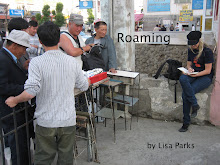
Transmediale Opening - Roaming

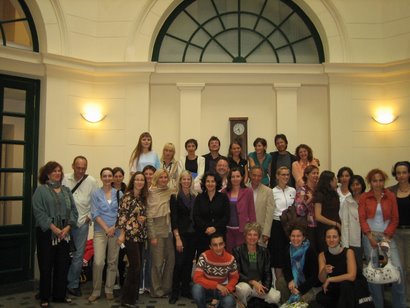
Participants in CEU Seminar
Naran Satellite Station, Mongolia
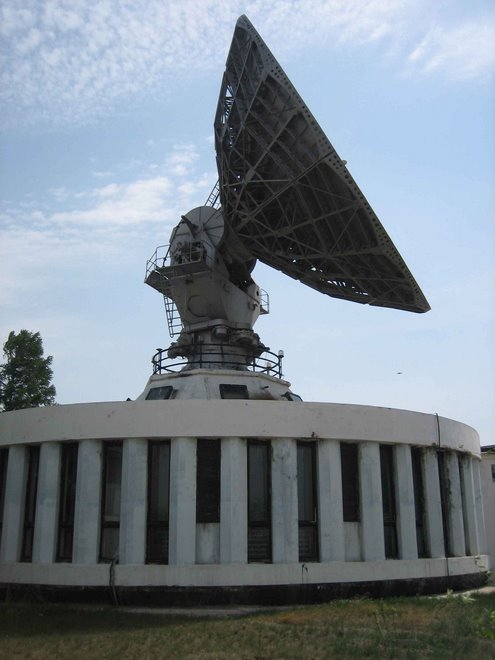
Intersputnik dish
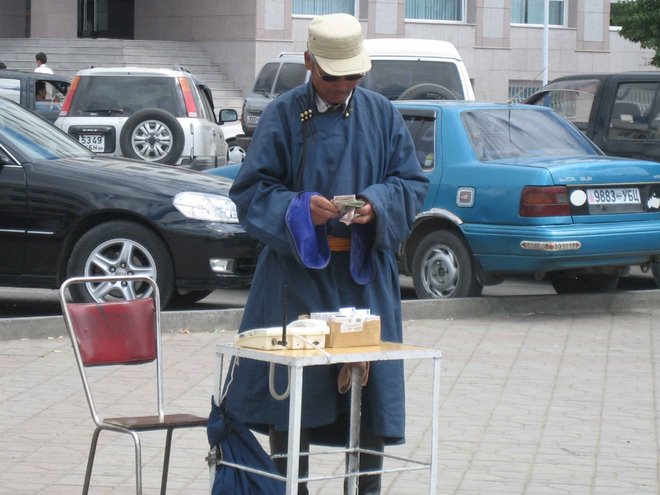
Former herder now a white phone worker
Inside Choijin Lama Temple
Naran's Grandma and the rug she made
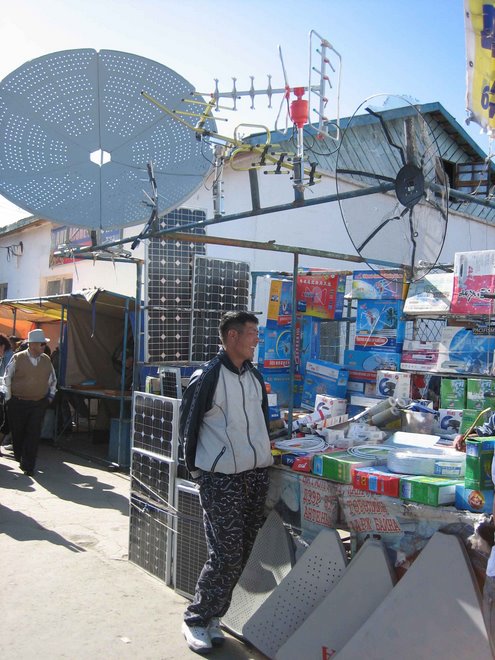
Satellite Dishes and Solar Panels for Sale at Black Market in Ulaanbatar
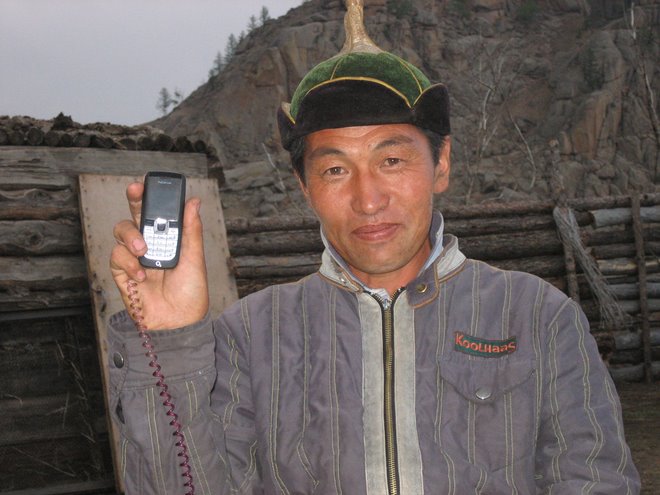
Ponjee and his Nokia phone
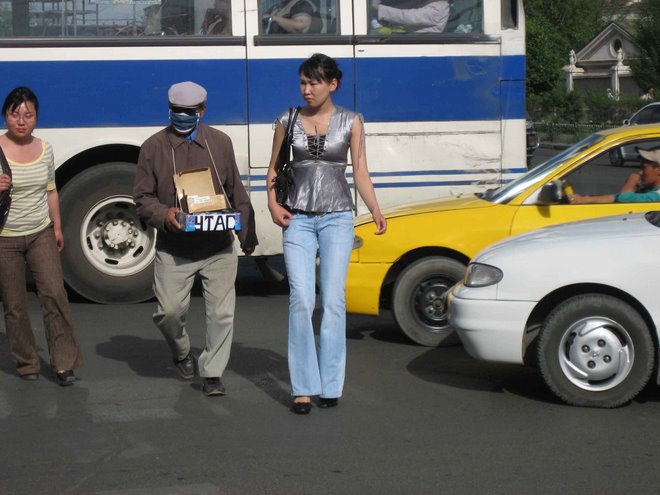
walking phone = yavdag utas
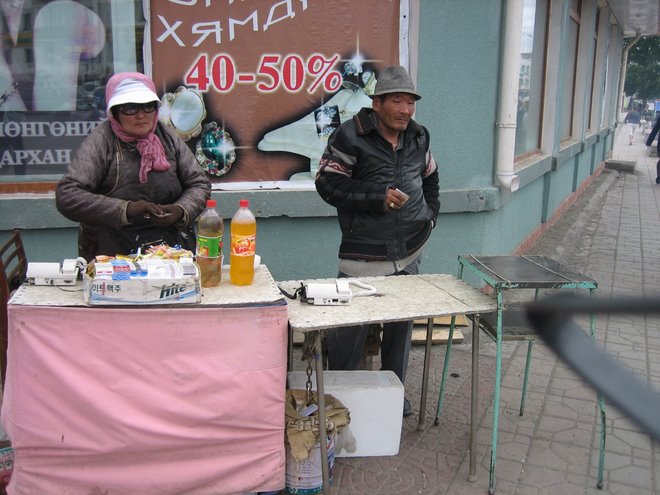
Wireless Phone Workers
Wireless Phone Worker
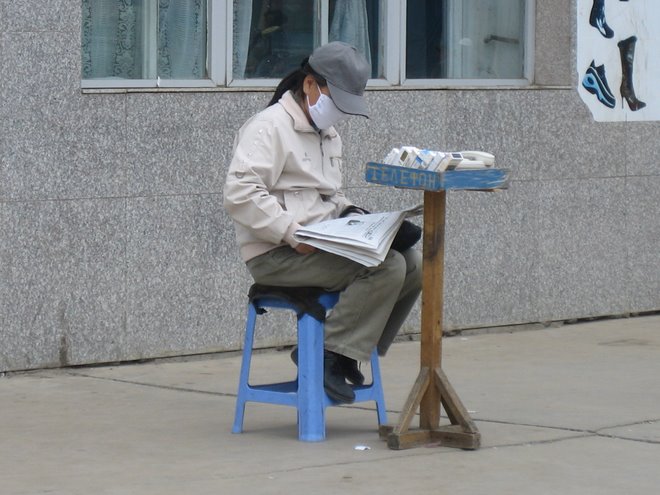

Satellite Dish and Tool Seller at Black Market